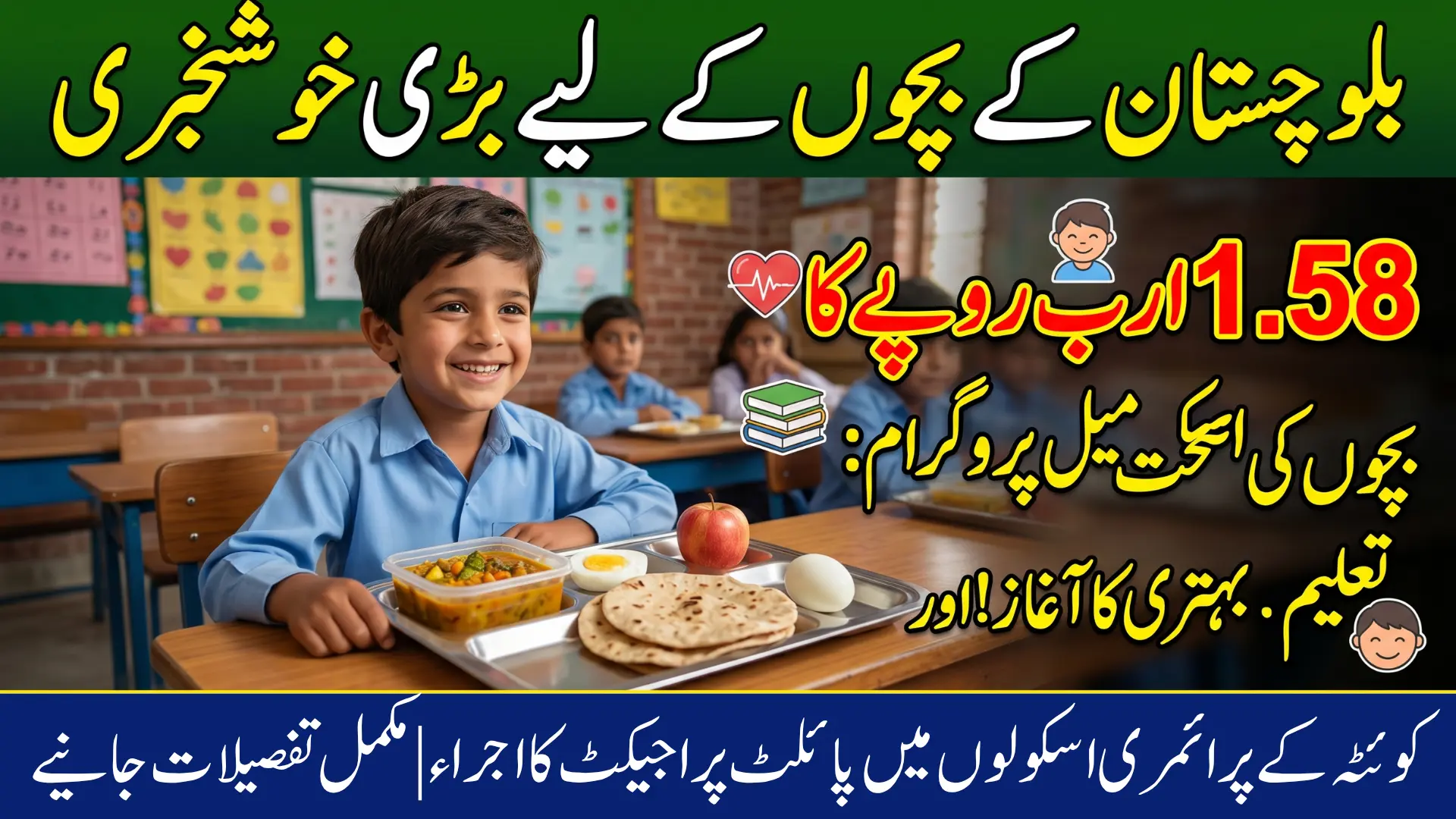
The Balochistan government has launched a Rs. 1.58 billion School Meal Program for primary school students in Quetta, aiming to improve child nutrition, health, school attendance, and classroom learning. The project will start as a pilot, with Rs. 315.9 million allocated for the current year.
Parents should note that the scheme is currently focused on Quetta, while school lists, meal menus, launch dates, and any registration details are still awaited. The initiative could provide meaningful support to children from low-income families nationwide.
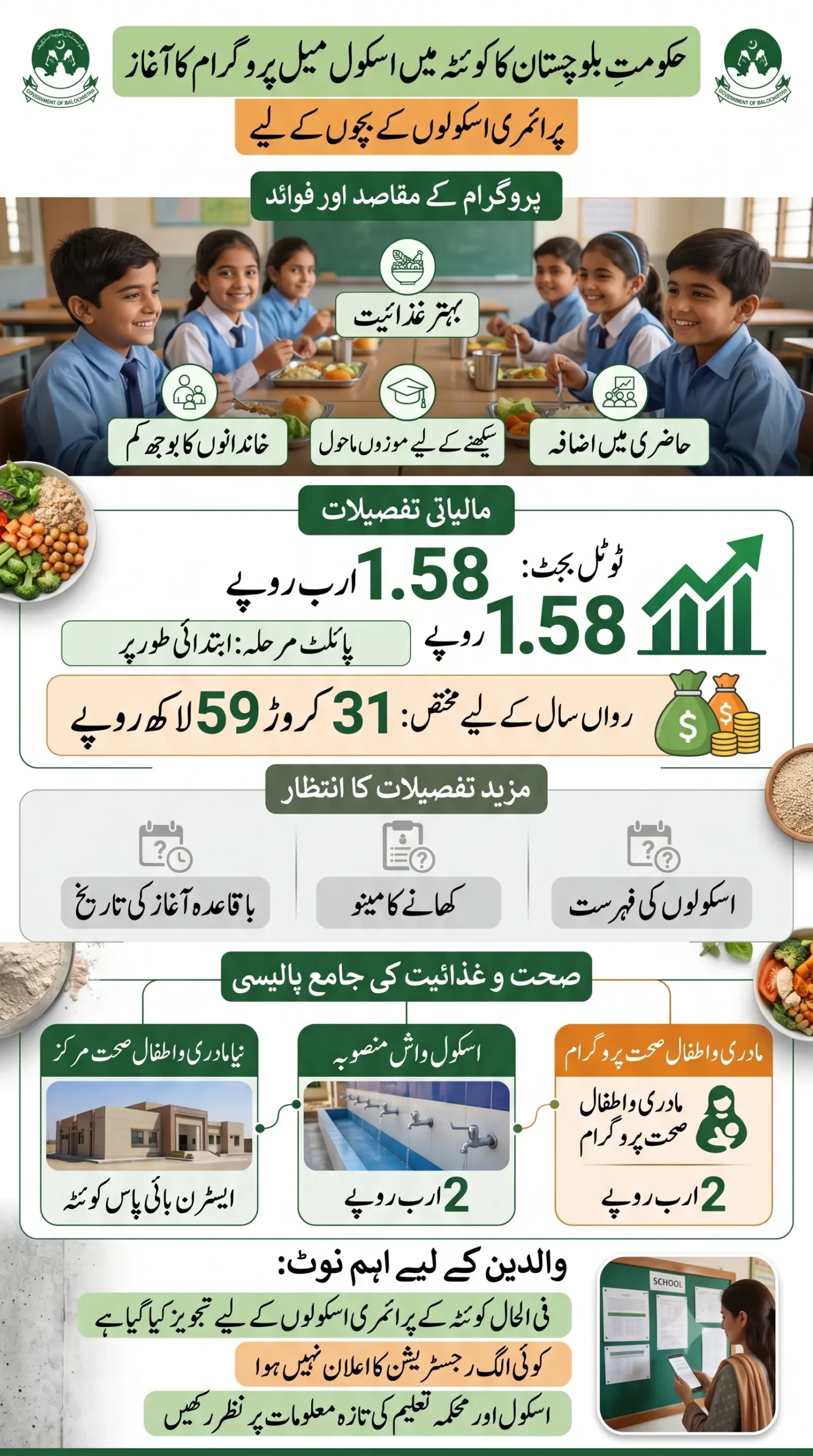
Balochistan School Meal Scheme New Update 2026
The Balochistan School Meal Program is a Rs. 1.579 billion pilot initiative for primary school students in Quetta. It aims to support child nutrition and improve students’ health and learning ability.
For the current year, Rs. 315.9 million has been allocated for the project. At this stage, the program is focused on Quetta and details such as the food menu, exact launch dates, and school-wise coverage have not yet been publicly confirmed.
Also Read: Prime Minister Apna Ghar Scheme 2026 Online Apply Guide – Eligibility and Registration Process
School Meal Program at a Glance
| Detail | Information |
|---|---|
| Program name | School Meal Program for Primary School Students |
| Main location | Quetta, Balochistan |
| Target group | Primary school students |
| Total project cost | Rs. 1.579 billion |
| Current year allocation | Rs. 315.9 million |
| Project status | Pilot implementation |
| Main purpose | Improve child nutrition, health, and school support |
What is the Balochistan School Meal Program?
The School Meal Program is a planned nutrition support scheme for children studying in primary schools in Quetta. The main idea is simple: when children receive healthy food during school hours, they may be better able to concentrate in class, attend school regularly, and stay physically active.
This is especially important in areas where many families struggle with rising food prices and children may not always get a balanced meal before leaving home. The project is not only about providing food. It is part of a broader public health approach that connects education, nutrition, sanitation, and child wellbeing.
Also Read: Cross Subsidy Program Apply Online Through QR Code Step-by-Step 2026 Details
Who Will Benefit From the Program?
The first phase is designed for primary school students in Quetta. This means the project is currently not confirmed for all districts of Balochistan. Families outside Quetta may need to wait for future expansion plans or official announcements.
The program could especially help children who face food insecurity, poor nutrition, weak immunity, or difficulty concentrating during school hours. However, parents should keep one important point in mind: no separate registration process, food menu, or final list of covered schools has been officially shared yet.
Why School Meals Matter for Children
A school meal may look like a small support, but it can affect a child’s whole day. A hungry child may feel tired, sleepy, irritated, or unable to focus on lessons. Regular access to nutritious food can help children stay energetic and may also improve classroom participation.
School feeding programs can also encourage attendance. Some parents are more likely to send children to school regularly when they know their child will receive basic nutrition during the day. For government schools, this kind of support can become a practical way to connect education with child health.
A Parent’s Everyday Experience: What This Could Change
A parent in Quetta preparing children for school early in the morning while managing a limited household budget. On some days, breakfast may only be tea and bread, or a child may leave for school without eating properly. By midday, that child can become tired and lose interest in lessons.
A reliable school meal can reduce some pressure on families and give children a better chance to stay active in class. For many parents, it is not just food; it is peace of mind that their child is getting at least one proper meal during the school day.
Also Read: CM Honhaar Scholarship Apply Online 2026 – Eligibility, Registration Process & Latest Updates
Part of a Bigger Child Health Plan in Balochistan
The School Meal Program is one part of a much larger provincial development plan focused on mothers, newborns, children, sanitation, and nutrition.
Balochistan is also working on several related projects, including:
- A Rs. 2 billion Comprehensive Maternal and Child Health Program
- Rs. 228.8 million allocated for maternal and child health work during the current year
- A Rs. 2 billion WASH project for water, sanitation, and hygiene facilities in schools
- Rs. 200 million allocated for school WASH facilities in the current year
- A maternal, newborn, and child health facility at Eastern Bypass, Quetta
- The Eastern Bypass facility has a total project cost of Rs. 400 million, with Rs. 200 million allocated this year
These projects show that the provincial focus is not limited to meals alone. The wider goal is to improve health conditions for children before, during, and after their school years.
Why WASH Facilities Are Important Alongside School Meals
Providing meals in schools works better when schools also have clean drinking water, handwashing areas, and proper toilets. This is where WASH facilities become important. WASH stands for water, sanitation, and hygiene.
For example, if children receive food at school but do not have access to clean water or handwashing facilities, health risks can remain high. Better sanitation can help reduce illness and create a safer environment for students. The school meal plan, hygiene facilities, and deworming efforts can support each other when implemented properly.
Read More: CM Punjab Kisan Card Apply Online 2026 Step-by-Step Full Details
Will Parents Need to Apply for the School Meal Program?
So far, there is no official announcement about a separate application or online registration process for parents. Because the project is expected to run through selected primary schools in Quetta, the likely process may be handled through schools and education authorities rather than individual family applications.
Parents should follow updates from their child’s school, the Balochistan Education Department, and local district authorities for confirmed details.
What Details Are Still Awaited?
The government has shared the financial scope and overall purpose of the School Meal Program, but some practical details are still awaited.
These include:
- Names of schools included in the pilot phase
- Exact date of meal distribution
- Daily or weekly food menu
- Number of students expected to benefit
- Whether the plan will expand beyond Quetta
- Monitoring system for food quality and attendance
Clear information on these points will help parents understand how the scheme will work at school level.
Also Read: CM Punjab Rehmat Card Program Apply Online 2026 – Know Full Details
FAQs
Is the School Meal Program available across all of Balochistan?
No. The project is currently planned as a pilot for primary school students in Quetta.
What is the total budget of the School Meal Program?
The total cost is Rs. 1.579 billion, commonly rounded to Rs. 1.58 billion.
How much money has been allocated this year?
Rs. 315.9 million has been allocated for the current year.
Do parents need to submit an application?
No separate application procedure has been announced so far. Parents should check with their child’s school for updates.
What food will children receive under the program?
The official meal menu has not been publicly confirmed yet. Authorities may share food details when implementation begins.
Final Thoughts
The Balochistan School Meal Program could become an important support system for young students in Quetta, especially for families facing financial pressure and nutrition challenges.
Its real success will depend on proper food quality, regular delivery, clean school facilities, and transparent coverage of eligible schools. If the pilot works well, it may create a strong case for expanding school nutrition support to more districts across Balochistan.